
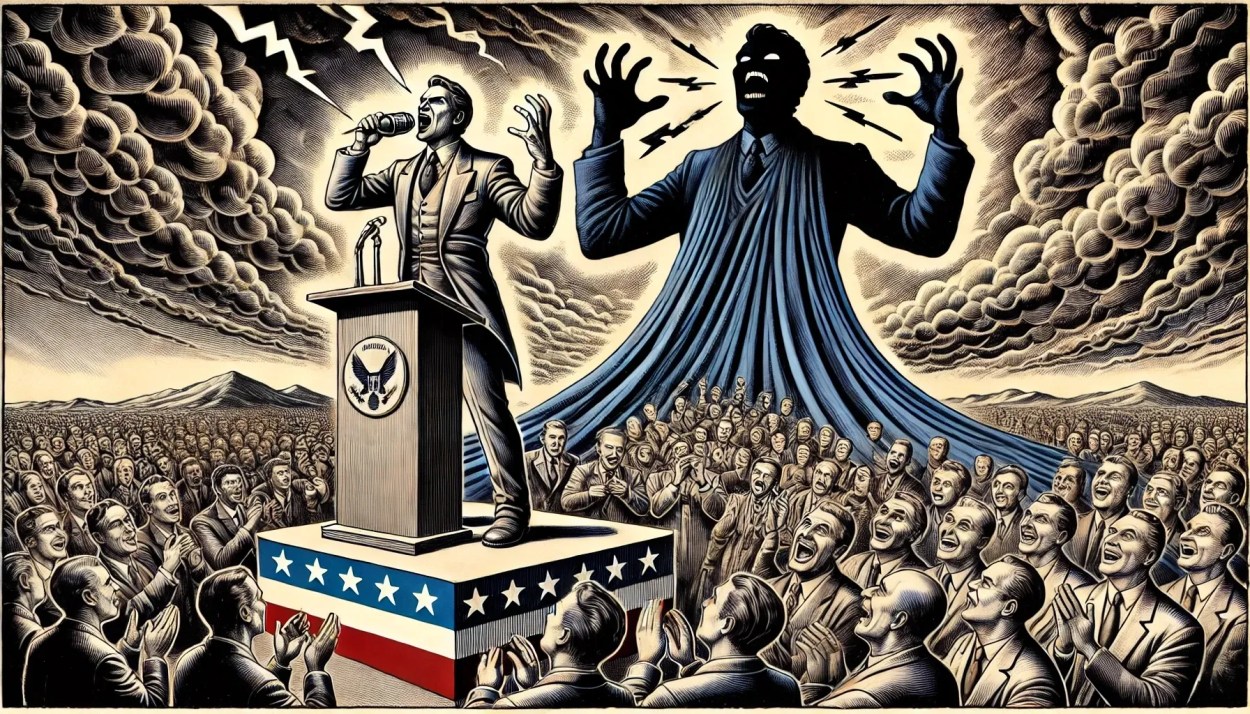
Our political culture has been captured by grievance politics. Grievance politics is when political thinking comes first and foremost from the grievances people have and centers those grievances. Now it’s important for politics to respond to people’s grievances, but I don’t think we will have a healthy political culture when political engagement and thinking is driven, inspired and motivated by grievances. More than that, these grievances that people have then get inflamed and pointed at another group (the political opposition) as the cause and source and reason for the grievance.
The perverse thing about grievance politics is that the aggrieved group isn’t always looking to have their grievance rectified, but sometimes they are looking for revenge against those who produced the grievance. They aren’t concerned about getting better but getting even, and are willing to tear down any and everything that could get in the way. I want to take a look at a story from the Bible that I believe can give us insight into the dangers of grievance politics.
The story I want to look at is that of Cain and Abel. This story takes place in almost the very beginning of the Bible. It’s found in Genesis 4:1-16. Let me give a summary of this story. What happens in this story is that Cain and Abel are brothers and one day they bring an offering to God. Cain was a “worker of the ground” and Abel was a “keeper of sheep”. This is important for what happens to Cain. When they make their offering, Abel’s is accepted but the Bible says that “but for Cain and his, he had no regard.” This makes Cain mad and “his face falls”. In response, God tells Cain that if he does well he will be accepted. However if he doesn’t do well, God warns that “sin is crouching at the door. Its desire is contrary to you, but you must rule over it.”
Unfortunately, Cain does not rule over sin but ends up killing his brother Abel and then lies to God about it. As a result, God is furious and says that Abel’s blood cries out to him from the ground (this is the part where it’s important to know that Cain was a “worker of the ground”). Cain’s consequence is he is now cursed from the ground and the ground will no longer “yield its strength” for him. Cain then is also going to be a “fugitive and wanderer of the earth”. This story is only 16 verses but it is densely packed with wisdom and meaning that could fill a book.
I think part of that wisdom and meaning can give us insight into grievance politics we need to learn if we don’t want our politics to tear us apart. So what does this story teach us? I think a central thing this story teaches us is that when grievances tempt us to give in to bitterness, resentment, and revenge; we destroy the very standards that produce our meaning and purpose when we let those temptations or “sins” have their way with us. As a result, we are left lost and wandering because we have now lost our purpose and meaning once we have torn down those standards we see as the source of our grievances.
I mean is this not precisely what happens to Cain? Cain is pissed because God accepted Abel’s offering and not his own. Fueled by his grievances against God, Cain lets vengeance and bitterness overcome him and he kills Abel. Abel, as Cain’s brother, shows us the ways we will hurt the people closest to us when resentment rules our hearts. More than that though, Abel symbolizes “the standard” of doing things right. Cain in his fiery vengeance couldn’t stand that he wasn’t all he wished to be and wasn’t viewed by others the way he wished he was, and so he tore down the very standard itself that only showed him how he had once failed.
In response to this desecration of “standards” and rebellion against “standards”, Cain refuses to repent and acknowledge how he has done wrong and the consequences end up being more than he can bear. As a “worker of the ground”, his purpose and meaning is found in producing fruit from the ground but now the ground itself is cursed against him and he is left wondering the earth. In other words, he now has lost his meaning and purpose and is lost wandering around in this despair. What can this tell us about our politics?
Well if we aren’t careful, we might end up repeating the pattern of Cain in our politics. When grievances drive our politics, our policies and political leaders are not aimed at actually solving problems, but are more directed to get revenge against the people or the standards we feel have caused our grievances in the first place. If we have economic or financial grievances, then the goal is to punish the people we believe have harmed us. We might start being animated and inspired by phrases like, “eat the rich”. Or maybe we start to have cultural grievances that our way of life is no longer respected and honored but is misunderstood and demeaned. Well, we might start being animated and inspired by phrases like, “drinking liberal tears”.
Now instead of letting the vision of a better life motivate us to improve our lives, we spend our energy on desiring the downfall of those who we believe are living “better” than us. Or instead of being motivated to show through the way we live that our culture has value and needs to be maintained, we decide that if our culture won’t be respected, then nobody’s will be and we will resist any attempt to construct a cultural standard.
The issue isn’t that we have grievances. In fact, we live in a broken and sinful world, we should have grievances. Our society is not perfect and unquestionably has harmed people, either by design or unintentionally. I also don’t think it’s a problem that people want their grievances heard, respected and addressed.
I think the danger is when grievances move into vengeance, bitterness and resentment. Then even more troublesome, when those grievances that have given us over to the spirit of vengeance then become the central animating feature of our politics. This is what I think has happened and is happening now in our politics.
Instead of thinking that maybe we have an imperfect standard of cultural tolerance, we have decided to get rid of the idea of tolerance altogether. Or rather than arguing that the idea of “toxic masculinity” itself has gone too far and has become toxic itself, we decided that there should be no standards for masculinity and that masculinity has no degenerate forms or tendencies. Maybe you don’t like those examples, so here’s a couple more.
Instead of arguing that sexuality and sexual activity is a powerful and potent part of being human and traditional sexual ethics were too restrictive and over-bearing, we decided that besides consent, there’s no other consideration that should restrain our sexual desires and impulses. Or maybe you didn’t get the job or position at work you wanted and since our nation is so racist and homophobic and patriarchal and Islamophobic and sexist and transphobic and ableist, if you aren’t a white straight cisgendered able bodied male, then you must have been discriminated against. Meritocracy is all a facade anyway for those in power to protect their power, so why should the concept of meritocracy govern who gets into positions of power?
Now you may feel that I’m exaggerating things or misrepresenting and straw-manning a particular position or belief, and maybe that’s so. I just want to encourage you, that if you don’t already find yourself doing this, just pay attention to what is motivating people to support a particular political candidate, party or policy. You may disagree with the examples I’ve given of grievance politics here, but I think you will find that if you pay close enough attention, you will see how grievance is driving our politics across the political spectrum. If that’s the case and if grievances uncontrolled can lead us into destruction and sever us from our meaning and purpose, what does that say about the destruction we might walk into and what purpose and meaning might we lose as a nation if we don’t learn to rule over our grievances.
 Power of Words