
Like many people, I’ve been horrified at what has been happening in the war between Hamas and Israel. I find myself having deep conflicting feelings, emotions, and thoughts about what is happening. I am someone who is supportive and sympathetic to Israel and is quite critical and skeptical of Hamas. So, when this war broke out two years ago, I was unequivocally in support of Israel. Two years later, I must admit that my support and defense of Israel has diminished.
I’ve been struggling for a while to figure out exactly how I feel and what I think. In an attempt to do that, I want to do it by looking at a story found in Genesis. Before going through all of that though, let me just clear the air on some things. First off, do I think there is a genocide going on in Gaza? Well, that’s highly dependent on your definition of genocide.
Merriam-Webster defines genocide as “the deliberate and systematic destruction of a racial, political, or cultural group”. Brittanica defines genocide this way, “the deliberate and systematic destruction of a group of people because of their ethnicity, nationality, religion, or race.” The United States Holocaust Memorial Museum says this about genocide, “The legal term “genocide” refers to certain acts committed with the intent to destroy, in whole or in part, a national, ethnic, racial, or religious group. Genocide is an international crime, according to the Convention on the Prevention and Punishment of the Crime of Genocide (1948). The acts that constitute genocide fall into five categories:
- Killing members of the group
- Causing serious bodily or mental harm to members of the group
- Deliberately inflicting on the group conditions of life calculated to bring about its physical destruction, in whole or in part
- Imposing measures intended to prevent births within the group
- Forcibly transferring children of the group to another group”
All these definitions are pretty similar but not identical. If we look at the Meriam-Webster definition, I think what Israel is doing does amount to a genocide. There is a systematic and deliberate destruction of Hamas, which is a political group of the Palestinians. As for the Palestinian people themselves, I don’t think there is a genocide. When you look at the Brittanica definitions, I don’t think what Israel is doing would be considered genocide. If we look at the legal definition from the Memorial Museum, I also think what is happening in Gaza does not amount to genocide.
I understand that there are genocide scholars and organizations which are coming out and declaring that there is a genocide occurring in Gaza, and so yes, I understand I’m not fully in line with the experts on this. I just can’t shake the feeling that genocide is fundamentally about having the intent to destroy a group of people because of their identity. I don’t want to minimize or ignore the staggering level of suffering and destruction and evil Israel has inflicted on the Palestinians in Gaza, but I’m not convinced their goal is to destroy and kill the Palestinian people themselves.
Israel’s goal is to utterly eradicate Hamas. I do think that if Hamas surrendered and their leaders stopped the fighting, returned the hostages, and turned themselves in, Israel would not continue to attack Gaza. If this is true, then I don’t think what Israel is doing amounts to genocide, since the goal of the fighting is not to destroy and kill Palestinians but to kill and destroy Hamas. Since there has been a cease-fire that’s been agreed to, we will be able to put this hypothesis to the test.
This doesn’t mean that Israel hasn’t committed war crimes, as they undoubtedly have done with some of the ways they have distributed aid or led attacks that have killed thousands of civilian women and children. I also think there is strong evidence to support the claims of ethnic cleansing in the ways that Palestinians are being moved around in Gaza and might even be required to leave Gaza altogether. I don’t want to let definitions get in the way in acknowledging the suffering and evil that is being inflicted on the Palestinians in Gaza. Whether what is happening is technically a genocide or not is not what’s most important. What’s most important is pointing out the ways many Palestinians are not being treated as image bearers of God.
We would do well to remember how this war started though. Hamas savagely and barbarically attacked Israeli citizens, citizens who were the most sympathetic to the Palestinian cause might I add. The response of Israel has moved from being justified, to unjustified in the two years of the war though. What has started off as a war of defense and righteous pursuit to get hostages back and hold Hamas accountable has devolved into unimaginable devastation for Palestinian families who had nothing to do with October 7th.
What sort of choice did Israel have though? Hamas has vowed to perpetuate more October 7th, they have embedded their military in the civilian population of the Palestinians, they built the most sophisticated underground tunnels this world has seen and they only let their fighters use them for cover, they steal aid and resell it, they use civilians as human shields, they don’t wear clear marked military uniform but dress as civilians, many Palestinians are sympathetic to Hamas, their goal is to maximize the death of civilian Palestinians to bring moral condemnation and judgement on Israel. How is Israel supposed to fight an opponent like this without there being significant civilian death and destruction? How can Israel share a border with a people group who is bent on their destruction and who have genocidal intent towards Israel, and who I believe would actually try to commit a Genocide on Israelis if they had the means?
On the other hand, what other choice did the Palestinians have besides Oct 7th? For years they feel like they have been treated unfairly by the Israelis and feel like the Israelis have obstructed many paths to peace. Palestinians feel like they have tried using the political process for years to get the rights and land they deserve but it has not materialized what they feel they are owed. They felt like the world was starting to no longer pay attention to their suffering and oppression at the hands of Israel and so they felt they need to take drastic action to get the world’s attention.
Well, before considering some of these problems directly, I want to look at a passage in Genesis 6 that I think could be helpful in helping us understand what is happening in Gaza between the Palestinians and Israelis.
When we look at the book of Genesis, it has been argued that the first 11 chapters of Genesis are distinct from what follows in the rest of the book. The first 11 chapters of Genesis have been thought to be more of a theological story and less of a historical story. As a theological story of the world, the stories in the first 11 chapters of Genesis may not be super concerned with historicity but more concerned about giving us insights into who God is and the patterns that make up our world. One of those patterns is the pattern of death and life, destruction and rebirth and we see this pattern exemplified most in the flood story.
It’s always a bit shocking for me to notice how quickly the flood appears in the narrative of the Bible. We have the creation story in chapters 1 and 2, then we have Adam and Eve in chapter 3, next is Cain and Abel in chapter 4, followed by a genealogy in chapter 5, and then we get to the flood story in chapter 6. It feels like right after God has finished creation, he almost immediately regrets his creation and decides he needs to start all over. So, let’s take a look at our passage and see if we can understand what is going on here.
Genesis 6:1-8 ESV
“When man began to multiply on the face of the land and daughters were born to them, the sons of God saw that the daughters of man were attractive. And they took as their wives any they chose. Then the Lord said, “My Spirit shall not abide in[a] man forever, for he is flesh: his days shall be 120 years.” The Nephilim were on the earth in those days, and also afterward, when the sons of God came in to the daughters of man and they bore children to them. These were the mighty men who were of old, the men of renown. The Lord saw that the wickedness of man was great in the earth, and that every intention of the thoughts of his heart was only evil continually. And the Lord regretted that he had made man on the earth, and it grieved him to his heart. So the Lord said, “I will blot out man whom I have created from the face of the land, man and animals and creeping things and birds of the heavens, for I am sorry that I have made them.” But Noah found favor in the eyes of the Lord.
The first question I had when looking at this passage was, who are these sons of God? Some scholars suggest that this term refers to a group of Godly men who were following God, while others think this is talking about elites in societies like kings and royal family members and aristocrats and such. The interpretation I’m partial to is that this phrase “sons of God” is referring to angels or divine beings. If you have ever heard people talk about “fallen angels” this is the passage they are referring to.
I prefer this understanding because this term “sons of God” gets used in the Old Testament in other contexts. When it’s used, it’s referring to angels or divine beings or God’s divine council. Also, there are New Testament passages in 2 Peter and Jude that mention angels receiving punishment for sinning. This passage seems to be the only account in the Bible that would fit the description of an angel sinning.
The next question I had was, who are the Nephilim? There’s two main ways people try to understand who the Nephilim were. One is to say that the Nephilim are the people described in the end of verse 4, they are mighty warriors from ancient times. This makes the Nephilim no more than humans who lived a long time ago, but men who’s battle acumen has been remembered for generations.
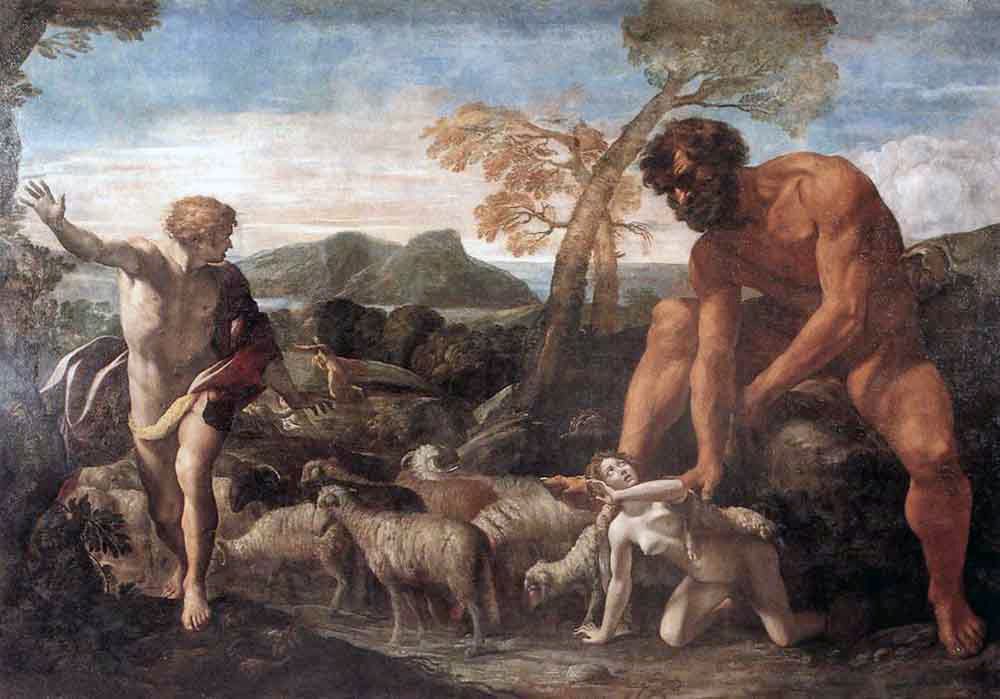
The other way the Nephilim are described, which I’ll admit is a bit more fantastical, but is the perspective I prefer, is that the Nephilim most likely were mighty warriors, but they were also giants. This word Nephilim is incredibly difficult to understand because it only gets used one other time in the OT, in Numbers 13:33. In this passage, the Israelites are scouting out the land of Caanan before they enter into it, and their scouts give a report saying: “There we saw the Nephilim (the Anakites come from the Nephilim), and to ourselves we seemed like grasshoppers, and so we seemed to them.” So, this could be an indication that the Biblical writers thought of the Nephilim as giants.
Ok so if you’ve followed me this far, I’m saying this passage is describing some strange event where fallen angels come down and marry human women and then their children end up being these giants, these Nephilim. You might be sitting there asking yourself, ok Kyrell, what’s the point? What does this mean beyond the fact that the Bible has very odd and strange stories in it that seem quite fantastical? Well, let’s step back and step into a symbolic way of thinking. Symbolic thinking involves taking key features in a story and thinking about how those features represent something bigger than itself.
So, when we do that with this story, we see that the sons of God represent “that which is higher” and the daughters of men represent “that which is lower”. This is because the sons of God as angels would come from heaven, which is above. The daughters of men come from earth, which is below. Also, in the category of being, angels are a higher level of being than humans, being spiritual beings. Then the Nephilim who are these giant warriors, they represent something like a monster, a distortion of reality.
So, when we put this all together, what do we get, what sort of pattern is revealed to us? When “that which is higher” inappropriately intermingles with “that which is lower”, it produces distortions and monsters. It’s important that we understand that monsters are born out of an inappropriate intermingling of the higher and lower, not just the mere fact of the higher and lower coming together at all. There are appropriate ways for divine beings and humans to interact, but marrying and having children is not one of them.
This is part of the rationale for religious structures like temples and altars and then the rituals that emanate from them. For ancient people, the divine was too powerful and overwhelming for humans to interact with in an unmediated way. This is why when angels appear to people in the Bible, the people’s immediate response is fear and prostration before this fearsome and awesome beings.
To create a space and way for humans and divine beings to interact appropriately and acceptably, temples and altars and rituals developed. These religious artifacts serve as a mediator between humans and the divine and make it safe for humans to interact with the divine. There’s so much more to say on this point but allow me just this short digression before returning back to the topic at hand.
Now you may think to yourself that it’s strange or odd that humans thought they needed some sort of mediation between humanity and the divine, we humans don’t really think in those terms today. Let me just point out that this perception of needing mediation between humans and the divine doesn’t come out of nowhere though but actually comes out of the normal human experience. What do I mean by this?
Well, humans need all sorts of mediations to survive. We need coats to mediate the cold temperature around our bodies, we need counselors to mediate our interactions with traumatic memories and emotions, we wear head gear to mediate blows to the head in sports like football and car racing. Humans have a thoroughly mediated world, and we always have. So, it’s not too much of a stretch to think that we fragile and frail humans also need some sort of mediation between us and the divine. This need for mediation between humans and the divine is part of what creates the framework around what is an appropriate interaction or mixing between humans and the divine.
In fact, for us Christians, that is precisely the role Jesus plays for us. He is the mediator between us humans and God the Father. More than that, the incarnation of Jesus serves as an example of an appropriate interaction between the human and the divine. More abstractly, this is an example of an appropriate mixing of “the higher” and “the lower”. The human nature of Jesus follows the lead of his divine nature and doesn’t try to usurp inappropriate control. I think we can spot an inappropriate mixing of “the higher” and “the lower” when, “that which is higher”, is no longer fulfilling its function or purpose in the world.
Now I know I have been speaking sort of vaguely and esoteric, but let me take the 2nd commandment from the 10 commandments, which is to not take the Lord’s name in vain, as an example which I hope will clarify what I think this principle is telling us about the world. Rather than the commandment being about not using God’s name as a curse word, which is still something I think we shouldn’t do, I think the commandment really is telling people to not do thing’s in the name of God that aren’t truly of God. It’s saying don’t claim to be acting in the name or interest of God, when you really are just acting in your own personal interest.
So, don’t take God’s name and reputation, which would be the thing that is higher, and use it serve your own purposes, which would be the thing that is lower. This is inappropriate because it stops God’s name and reputation from fulfilling its purpose which is building his kingdom and it distorts it to some other purpose, which would be building your own kingdom. And is history not full of powerfully destructive monstrosities that were birthed from people acting in their own interests but claiming it to be from God?
Before we continue forward, let me make a disclaimer that this symbolic language of not inappropriately mixing “that which is higher” with “that which is lower” could never support ideologies like eugenics, racism, classism, racial superiority, or any other sort of ideology that tries to suggest that some humans are worth more than other humans. This is because all humans are equal, and no type of human is higher than another. Now there are situations in society when some people hold a higher position than others, like a boss or political figure, and this concept is helpful in these contexts because it guards against abuse of the lower position by the higher position. I can’t take the time to detail out all the possible ways that this symbolic way of thinking of “the higher” and “the lower” can be misused and abused but I just want to acknowledge that I’m aware of it. I will point out that those ways of thinking would also be an inappropriate mixing of “the higher” and “the lower” and would produce monstrous beliefs and thinking.
Now that we have seen that inappropriately mixing “that which is higher” and “that which is lower” can give birth to monsters, I want to look at our passage and see what happens when this occurs. After talking about the birth of the Nephilim, our giants or monsters, it says that God saw the wickedness of humans and that every inclination of their heart was evil. This brings us to the third question I had about this passage, why were humans so wicked?
Now the passage doesn’t explicitly make a connection between the birth of the Nephilim and the wickedness of humans. However, the fact that these two occurrences are placed together in this passage and that God notices the wickedness of the humans after we are told about the birth of these monsters, I think the story might be hinting that there is a connection there. Is it too far of a stretch to think that once there is too much inappropriate mixing of what is higher and what is lower, where the things in life that are meant to be our highest ideals and aspirations begin to no longer fulfill their function, that this distorts the entire value hierarchy we are supposed to have and thus we lose our sense of direction about what is most valuable and what we should be living our lives for?
Once humans have lost their way and monsters have taken over the land, what else can you do but start over? It is at this point that God expresses his regret or sorrow for making humans and his desire to wipe them all out. In the next verse we are introduced to Noah, who is an encouragement to God that he doesn’t need to do away with all humans. This brings us to my final question of this passage; how does this passage relate to the flood story?
Well, we see that the story of the flood comes in the context of a world that has lost its sense of direction morally and spiritually. Its value system is completely distorted, and it is infested with monsters. It is in this sort of a state that God decides there needs to be a destruction to give way to a rebirth. The interesting and paradoxical thing is that apparently not all the Nephilim are wiped out in the flood.
As we saw, in the story of Joshua in Numbers 13, the Nephilim’s descendants are still around. In fact, it’s thought that Goliath and the other giant like people mentioned in 2 Samuel that David fights, are also descendants of Nephilim. What is the Bible trying to tell us? Monstrous choices have far reaching consequences.
So, instead of thinking this passage is about the Bible telling us that monstrous giants used to roam the earth before a worldwide flood, a symbolic way of interpreting this passage gives us a different insight. It shows us this pattern in our world that when the higher things in this world get inappropriately mixed with the lower things in this world, this creates monsters. In the wake of these monsters, we end up wandering away from what is most important and valuable in life which ends in destruction. But this destruction can then lead to rebirth. I want to show how this pattern found in the flood story is being played out in Israel and Gaza.
Both the Palestinians/Hamas and the Israelis/Israelite Government have fallen into this tragic pattern of mixing “the higher” and “the lower” and have birthed heinous and hideous monsters that are roaming the Gaza strip. Gazan Palestinians have mixed a desire for self-governance and autonomy with hatred for Israel. Israelis have mixed a desire for safety and security with fear and vengeance. What has been the result? A history of violence and oppression and terrorism and demonization that erupted with October 7th, 2023.
The monsters birthed in Palestine crossed the Israeli borders in the hearts and minds of Palestinian men and murdered 1200 innocent Israeli citizens and took 200+ of them hostage in a hellish terror tunnel back in Gaza. Thousands of Israeli families have been wounded by these ghoulish acts and have to encounter these Nephilim every time they think about the loss of their loved ones. These Hamas fighters surely felt like they were bringing honor to families by attacking those they saw as oppressors and evil forces suffocating their existence. The stated goal of acting to bring what they believe to be needed freedom to the Palestinians is an honorable thing, but when it gets mixed with hatred it turns into the monstrous and demonic acts we witnessed on October 7th.
As for the Israelis, the October 7th attack touched a primal and powerful desire for revenge. We can see the Israeli monsters trampling Gaza’s infrastructure, leaving Palestinian women and children buried in the rubble of crumbling buildings and homes. I understand that Gaza is an urban environment, that Hamas embeds themselves in the civilian population, that Israel claims to have an acceptable kill ratio of combatants to civilians in Gaza, and because of these things I have given Israel a long leash in this war. I have sided with Israel and lamented the death of non-combatant Palestinians but have blamed those deaths on Hamas and their evil war fighting tactics.
However, the Israeli monsters are too great to ignore. Some of you will be aghast that I am speaking so critical of Israel in this war, and some of you will be appalled that it has taken me this long to become this critical, and I get it. Either way, I must confront the fact that Israeli’s honorable desire to have safety and security for their people has been fused with a desire for vengeance that has produced towering Nephilim who knock over buildings and bury women and children in the pursuit of satiating a thirst for retribution.
Even if the revenge is aimed at just the Hamas leaders and not the Palestinian people, it feels like this revenge will consume anybody and anything to get what it wants. Not to mention the monsters lurking in the aid distribution debacle that contributed to food insecurity and a nutrition crisis in Gaza. Again, I understand that Hamas cynically and nefariously harms the process of getting food to Palestinian civilians, but Israel cannot avoid its responsibility contributing to the hunger and nutrition horror in Gaza.
So, who’s right, who’s wrong? Who do we support and defend and who do we oppose? I hope you understand that I don’t see it that clearly. Both sides have unleashed monsters who are becoming more and more uncontrolled and to just support one side or the other would be dangerous because it wouldn’t be dealing with all the Nephilim who have found a rebirth in their ancient native land. Well, what do we do from here then?
I must admit that I’m at a crossroads. I believe that it is intolerable having Hamas in leadership over the Palestinian people and I can’t help but feel that if Hamas is left in power, then Israel has lost this war. They would lose this war in two ways in my mind. First, they would lose because they did not complete their objective of eradicating Hamas. Secondly, they would lose because Hamas would learn that their absolutely demented and perverted war tactics can be successful, and they will be incentivized to use them again in the future.
On the other side, the death and destruction in Gaza is intolerable. It is intolerable based on the sheer scale of destruction and death of civilians (even if Israel has the best ratio of combatant to non-combatant kill ratio in urban warfare), but also because I’m no longer confident that Israel is being as careful as they claim to be in only trying to kill Hamas fighters. I’m becoming more and more convinced that they are becoming too accepting of innocent civilian casualties (again, I understand for some its enraging and disturbing that it’s taken me this long to come to this position, but I’ll just say that I think the monstrous way Hamas fights gives Israel a lot of rope, but I do think they are coming to the end of their rope now).
The Nephilim present in Gaza have distorted and misshapen the morality of all parties involved. I do think Hamas is more distorted and misshapen, but Israel is not without culpability and evil. As I mentioned earlier, both sides have agreed to a cease-fire deal and are in the process of phase 1 of this deal. Like any plan, it’s not perfect and not without flaws. I don’t see Israel accepting anything less that could motivate them to quit their military campaign and quit their hunting down of Hamas. I think it’s unlikely that Hamas follows through with all the terms, largely because I think Hamas only cares about themselves and that they don’t actually care about the Palestinian people and so any deal that puts them out of existence, I don’t see them following through with it.
Again, I don’t think it’s so black and white that we just side with one side over the other. I think at one point it was clear that Israel was in the right, and my sympathies do align more with Israel than with Hamas. I know there’s a whole history behind why Hamas is ruling over Gaza, but it just really sucks for the Palestinians that Hamas is their leadership. As long as Hamas is leading the Palestinians, I don’t see how Israel can have peace with the Palestinians when their leadership is not interested in a co-existence of Palestinians and Jews.
However, Isarael’s purity is no longer so clear and so now both parties have to make serious concessions and recognition of the atrocities they have participated in. The history of land in the middle east is rampant with examples of monsters born in one generation that have been able to persist through multiple succeeding generations. I think this war will only prove to continue this pattern. Even if there is a peace deal that ends the fighting and eradicates Hamas, we should not be so naive to think this will be the end. Our Genesis story reminds us that even a flood that puts an end to an era and provides the opportunity for new life, doesn’t totally eliminate the monsters in the land. Likewise, a single peace deal will not eradicate the Nephilim birthed by Israel and Hamas in this war and I fear their progeny will surface again in later generations to perpetuate their evil intentions.
 Power of Words